
If you're in your 40s and suddenly wondering, "Why can't I sleep anymore?", you're not alone.
Perimenopause can bring a whole new set of sleep challenges. Maybe you're having trouble falling asleep, waking up in the middle of the night, waking up at 3 AM with your mind racing, getting night sweats, or sleeping for eight hours but still waking up exhausted.
Sleep problems are common during the perimenopause/menopausal transition, and hormonal changes, hot flashes and night sweats, mood changes, and other factors can all contribute to disrupted sleep.
But I don't believe we have to simply accept poor sleep as another unavoidable part of getting older.
In this guide, I'm sharing my 12-step sleep protocol for women over 40—a collection of nighttime habits and rituals designed to help you create a calmer transition from your busy day into restorative sleep.
Some of these are evidence-based sleep hygiene practices. Others are rituals I've personally incorporated because they help me feel calmer, more grounded, and more intentional at night. Don’t miss my guide on how to turn your bedroom into a cozy sleep sanctuary.
In this guide, you'll learn:
Why perimenopause can affect sleep
Signs you're not getting enough quality sleep
How to create a better bedtime routine
Why a consistent bedtime matters
How temperature affects sleep
Why I turn off screens at night
Whether a hot bath can help you sleep
How I use reading, stretching and sound
My nighttime drink rituals
Supplements I personally use
How to create a "harmonious alarm"
When sleep problems may warrant talking to your doctor
Why Does Perimenopause Affect Sleep?
Perimenopause involves fluctuating hormone levels, and those shifts can affect sleep in ways that go well beyond hot flashes. In fact, Mayo Clinic notes that sleep changes can happen during perimenopause even when hot flashes aren't present at all.
Hormonal Changes
As estrogen and progesterone levels rise and fall unpredictably, they can affect the systems in your body that regulate sleep, mood, and body temperature—making it harder to fall asleep or stay asleep.
Hot Flashes and Night Sweats
For many women, hot flashes and night sweats are the most obvious sleep disruptors. Waking up overheated (or drenched) in the middle of the night makes it hard to fall back into a deep sleep.
Anxiety, Stress and Mood Changes
Perimenopause can bring increased anxiety, irritability, or a racing mind at bedtime—all of which can make it harder to relax enough to fall asleep.
Changes in Your Sleep Pattern
Some women notice they simply need less sleep, or that their natural sleep-wake rhythm shifts earlier or later during this stage of life.
Other Sleep Disorders Can Also Appear
Here's something worth saying clearly: insomnia isn't automatically "just hormones." Sleep apnea and restless legs syndrome can also emerge or worsen during this life stage, and they deserve their own attention.
Signs You May Not Be Getting Enough Quality Sleep
Do any of these sound familiar?
Waking up tired, even after a full night
Daytime fatigue
Difficulty concentrating
Memory issues
Irritability
Mood changes
Increased cravings
Relying on caffeine to get through the day
Difficulty exercising
Frequent nighttime awakenings
Waking too early
Difficulty falling asleep
Feeling like you need to "catch up" on weekends
If you recognized yourself in several of these, you're exactly who this protocol is for. Don’t forget to read my post on 14 ways to navigate perimenopause effortlessly.
My 12-Step Sleep Protocol for Women Over 40
1. Prepare for Tomorrow Before You Go to Bed
Before I wind down, I take a few minutes to set myself up for the next day:
Write tomorrow's to-do list
Lay out clothes
Decide on breakfast
Prepare anything I need for the morning
Writing a brief to-do list before bed has been studied as a way of helping with sleep onset, and bedtime routines like this are commonly recommended as part of good sleep hygiene. Getting the "open loops" out of your head and onto paper makes it much easier to actually relax.
2. Eat Dinner Earlier
I try to leave enough time between dinner and bed to actually digest, and I avoid very heavy meals close to bedtime. I try to eat around 6:30-7:00 every night. General sleep guidance recommends avoiding heavy meals right before you turn in, and I've noticed the difference myself:
"I personally prefer to finish dinner earlier because I notice that I sleep better when I'm not going to bed immediately after a large meal."
Pay attention to how meal timing affects your own sleep—it's a very individual thing.
3. Take a Hot Bath or Shower
There's a real physiological reason a warm bath or shower before bed can help: warming yourself and then allowing your body to cool afterward can support the natural transition your body makes toward sleep.
But that's not really why I do it:
"I'm not taking a bath to detox. I'm taking it because it's one of my favorite ways to tell my body that the day is ending."
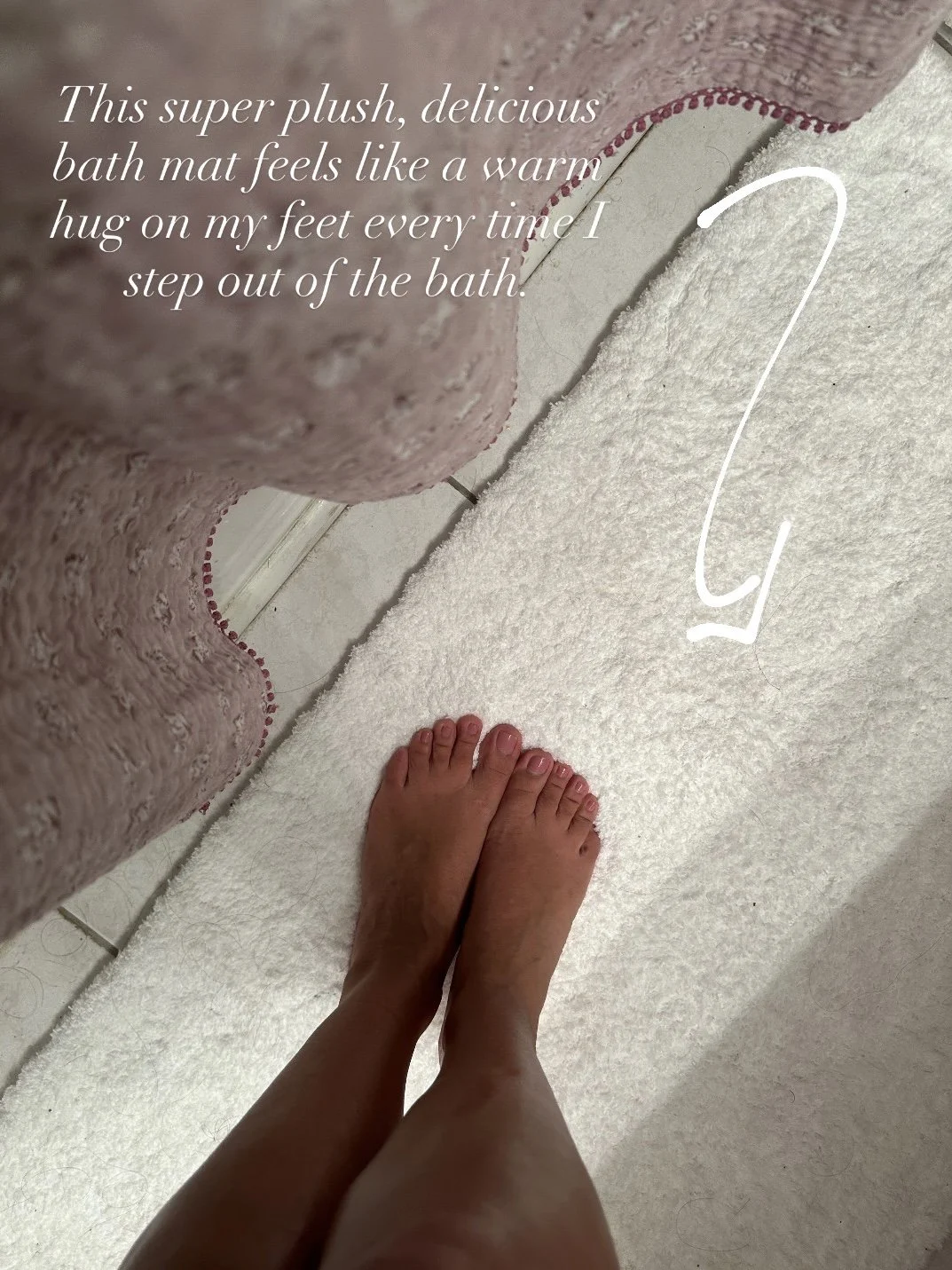
The best part for me is getting out of the bath and stepping onto this delicious, plush bath mat. It feels like a warm hug that puts my body right into sleep mode.
4. Turn Off Screens and Dim the Lights
About an hour before bed, I turn off:
Phones
Television
Laptops
Overhead lighting
And I switch to warm lighting, candles, or smart circadian bulbs instead. Evening light exposure can affect your sleep-wake cycle, and sleep-hygiene guidance commonly recommends reducing bright light and screen exposure before bed.
If I have to be on my phone, I use these blue light glasses.
I use the Govee light bulbs and set them to amber at 7:30pm.
5. Create a Nervous-System Wind-Down Ritual
This is where I shift from doing to being. Instead of rushing straight from my last task of the day into bed, I give myself a few minutes to actively calm my nervous system—slow breathing, a few minutes of quiet, or a tool like my Pulsetto to help me downshift out of "go mode."
Be sure to read my list of 20 must have essentials for turning your bedroom into a sleep santcuary.
6. Read a Physical Book
I trade scrolling for reading. A physical book (not a screen) gives my mind something to focus on that isn't stimulating in the way news, social media, or email can be.
7. Try a Bedtime Drink
I rotate between a few different options depending on the night:
Tart cherry juice — Research on tart cherry and sleep is interesting, but it's not conclusive enough to promise it will work for everyone. I enjoy it as part of my ritual rather than as a guaranteed fix.
Lemon balm tea - especially powerful for women during hormonal changes for relaxation & calm.
Chamomile tea — A classic, calming part of a bedtime ritual.
Nettle tea — Something I personally enjoy, not a scientifically established "detox while you sleep" treatment.
8. Make Skincare Part of Your Sleep Ritual
I love using this time to also care for my skin. It's a small, grounding ritual, and it ties beautifully into healthy aging:
"Your nighttime skincare routine is lovely, but your best beauty treatment is still sleep."
9. Gentle Stretching Before Bed
A few minutes of gentle stretching helps release physical tension from the day. I keep it simple and relaxation-focused—this isn't about deep fascia work, just easing your body toward rest.
10. Go to Bed at the Same Time Every Night
This is one of the most well-supported habits on this list. A consistent sleep and wake schedule is a core sleep-hygiene recommendation because it reinforces your body's natural sleep-wake rhythm.
"I'm not trying to be perfect. I'm trying to be consistent."
11. Listen to Harmonious Sounds
Gongs, singing bowls, ambient sound, or relaxing music are part of my wind-down. I think of this as a relaxation ritual rather than a claim that certain frequencies put your brain into any particular state—it simply helps me relax.
12. Create a Harmonious Alarm
This is the piece most sleep articles leave out—and I think it deserves just as much attention as anything you do before bed.
Why Your Morning Matters
Your sleep routine doesn't actually end when you fall asleep. How you wake up shapes your whole day and can even shape how you feel about bedtime the night before.
I focus on:
Gentle alarm sounds instead of jarring ones
Waking up to a favorite song
A sunrise alarm or natural morning light
Creating something to genuinely look forward to in the morning
"I want my alarm to be something I look forward to—not something I'm afraid of."
Keep Your Bedroom Cool
Your bedroom environment deserves its own spotlight, especially during perimenopause.
I keep a few things consistent:
A cool room temperature—I personally aim for around 68–70°F
Breathable pajamas
Cotton or linen bedding
A fan for airflow
Layers I can add or remove overnight
Cooling mattress or bedding materials
A dark room
"I keep my bedroom around 68–70°F because I sleep better when I'm cool."
A cool, dark, quiet bedroom is consistently recommended in sleep guidance for everyone—but for perimenopause specifically, managing temperature can be especially helpful when night sweats or hot flashes are disrupting your sleep.
What About Sleep Supplements?
A note before this section: I'm sharing what I personally use, not a prescription. Supplements affect everyone differently, and it's worth talking to your healthcare provider before adding anything new—especially during perimenopause, when your body is already going through a lot of change.
Magnesium Glycinate gummies
Evidence for magnesium supplements improving sleep varies from person to person but for me, its been so helpful. Some women find it helpful as part of an overall routine.
L-Theanine
Often used for relaxation, though the evidence here is still fairly limited. I think of it as a gentle addition rather than a solution on its own. I love to use this liquid vitamin blend before my nightly stretch.
Apigenin
This compound is connected to chamomile, and while it's promising, isolated apigenin supplements shouldn't be treated as proven for sleep.
Melatonin
This one deserves extra care. Melatonin isn't necessarily a nightly "knockout pill." It can be more useful for specific circadian timing situations—like jet lag—than as a general sleep aid taken every night. Talk to your doctor before making melatonin a regular habit, especially during perimenopause.
What Else Can You Do During the Day to Sleep Better During Perimenopause?
Good sleep isn't only built at night—what you do during the day matters just as much.
Morning sunlight — Getting bright light during the day helps reinforce your circadian timing. Sleep guidance commonly recommends daytime light exposure for this reason.
Exercise — Regular physical activity can support better sleep, though very intense exercise immediately before bed may be disruptive for some people.
Caffeine — Pay attention to both timing and your own sensitivity. What works for one woman may keep another wide awake at midnight.
Alcohol — This one is especially important during perimenopause. Alcohol can make you feel sleepy initially, but it tends to disrupt sleep later in the night.
Naps — Keep them short, or skip them altogether if they're interfering with your nighttime sleep.
Morning routine — This connects right back to your harmonious alarm—a morning worth waking up for makes the whole cycle easier.
What to Do If You Wake Up at 3 AM During Perimenopause
Waking up at 3 AM is one of the most common—and most frustrating—perimenopause sleep complaints. If it happens to you, here's what I'd suggest:
Don't immediately grab your phone
Don't start worrying about how many hours are left
Keep the lights dim
Try slow, deliberate breathing
Listen to something calming
Read something boring or relaxing if you're fully awake
Return to bed once you feel sleepy again, rather than forcing it
And one more important note: if nighttime waking is frequent or persistent, don't assume it's simply perimenopause. Talk with your healthcare professional.
When Should You Talk to a Doctor About Perimenopause Sleep Problems?
Lifestyle habits and rituals can help a lot, but they're not a substitute for medical care. It's worth talking to a healthcare professional if:
Insomnia persists despite consistent habits
You're exhausted during the day, regularly
You're frequently waking throughout the night
You snore loudly
You wake up gasping or choking
You have significant restless legs
Night sweats are severe
Your symptoms are dramatically affecting your quality of life
Sleep apnea and other sleep disorders can overlap with what women assume is "just menopause"—so it's always worth ruling out.
My Ideal Perimenopause Bedtime Routine
Here's what a typical evening looks like for me, start to finish. Adjust the times to fit your own schedule:
6:30 PM — Finish dinner
7:30 PM — Start dimming the lights
8:00 PM — Bath or shower
8:30 PM — Skincare
8:45 PM — Stretch + nervous-system ritual
9:00 PM — Tea or tart cherry spritzer
9:15 PM — Read
9:45 PM — Harmonious sounds
10:00 PM — Bed
6:00–6:30 AM — Harmonious alarm + morning light
Your 7-Day Perimenopause Sleep Reset
If twelve steps feels like a lot to take on at once, ease in with this 7-day reset:
Day 1 — Set a consistent bedtime.
Day 2 — Turn off screens 60 minutes before bed.
Day 3 — Make your bedroom cooler and darker.
Day 4 — Create a 10-minute relaxation ritual.
Day 5 — Add reading.
Day 6 — Create your harmonious alarm.
Day 7 — Put everything together.
By the end of the week, you'll have built a full routine—one small habit at a time.
Frequently Asked Questions
Can perimenopause cause insomnia? Yes. Fluctuating hormones, hot flashes, night sweats, and increased anxiety during perimenopause can all contribute to insomnia and other sleep disruptions.
Why can't I sleep during perimenopause? It's usually a combination of factors—hormonal shifts, hot flashes or night sweats, mood changes, and sometimes other sleep disorders like sleep apnea or restless legs syndrome that emerge or worsen during this life stage.
How can I sleep better during perimenopause? Consistent sleep hygiene habits—like a regular bedtime, a cool dark bedroom, limiting screens before bed, and a calming wind-down routine—can meaningfully improve sleep quality. If problems persist, talk to your healthcare provider.
Why do I wake up at 3 AM during perimenopause? This is a very common complaint during the menopausal transition, often related to hormonal fluctuations, hot flashes, or a racing mind. If it happens frequently, keep the lights dim, avoid your phone, and try slow breathing until you feel sleepy again.
What is the best bedtime routine for women over 40? There's no single "best" routine, but effective ones typically include a consistent bedtime, reduced screen time, a calming wind-down ritual, a cool dark bedroom, and a consistent wake time.
What temperature should my bedroom be for sleep? A cool bedroom is consistently recommended for better sleep. Many people find somewhere around 68–70°F comfortable, though the ideal temperature varies by individual.
Does a hot bath help you sleep? It can. Warming your body before bed and then allowing it to cool afterward can support the body's natural transition toward sleep.
Does tart cherry juice help with sleep? Research is interesting but not conclusive. Some people find it helpful as part of a bedtime ritual, though it isn't guaranteed to work for everyone.
Does magnesium help with sleep during perimenopause? Evidence varies by individual, and there's no guarantee it will work for everyone. Talk to your healthcare provider before adding any new supplement.
Should I take melatonin during perimenopause? Melatonin isn't necessarily meant to be used as a nightly sleep aid—it can be more helpful for specific circadian timing issues like jet lag. Talk to your doctor before making it a regular habit.
How many hours of sleep do women over 40 need? Most adults need at least seven hours of sleep, though individual needs vary. Rather than chasing a specific number, focus on giving yourself an adequate opportunity to sleep each night.
This article is for general informational purposes and isn't a substitute for medical advice. If you're experiencing persistent sleep problems, please talk to your healthcare provider.
You may also like:
🩷 How to start a journaling practice
🩷 What is perimenopause & 14 ways to navigate it
🩷 20 must have essentials for a cozy bedroom sleep sanctuary
Please feel free to email me at ashlina@thedecorista.com if you have any questions! I’m always happy to help with decorating, life advice or even picking out a specific perfume! Have an amazing day!!
Also, check out my Amazon shop HERE to shop all my favorite things, tips and tricks. You can also download the free LIKETOKNOW.IT app and follow me HERE.
STAY IN THE KNOW: Don’t forget to sign up for my exclusive Love Letters for STYLE TIPS, LIFE ADVICE, COSMIC TEA, AND MUCH MORE!
As always, thank you so much for stopping by today, I truly appreciate all of you! xo, Ashlina
p.s. This post may contain affiliate links, which means I'll receive a commission if you purchase through my link, at no extra cost to you. I am so grateful for your support.
Download my FREE Manifestation Mindset Makeover workbook here.