A guide to eating, living, and moving in a way that supports your hormones, energy, and longevity.
The Summer That Changed the Way I Live
There is nothing better than entering a new season a life, a fresh reset. Many times, they come of experiences that completely reshape you & how you see the world.
For me, that season was the summer I spent in the south of France.
It wasn’t anything dramatic. There wasn’t a single moment where everything clicked. It was a much slower shift than that. A calm evolving you could say. But day by day, it became something that completely recalibrated my essence.
I remember one evening while sitting down near the water in Saint Tropez, around Sunset, sitting outside at a long table with all of us laughing…I reached my fork to grab another bite of the homemade caprese salad and I thought to myself “does it get any better than this”?
Our meal wasn’t rushed or squeezed in between places to be. We are soaking in the sunset, listening to beautiful music, taking our time to really savor every bite. This was a visceral experience for me. We connected over conversation and eye contact as we were eating our food.
That never happened for us back at home.
So, I started paying attention to the locals when we were out on the town.
And what struck me most wasn’t just what they were eating.
It was how they were living.
There was a calmness. A steadiness. A sense that life wasn’t something to keep up with—but something to be experienced.
And when I came home, I realized something I couldn’t ignore:
I didn’t want to go back to the way I was living before.
Because in my 40s, I’ve learned that the body doesn’t respond to pressure the way it used to. It responds to care. To nourishment. To rhythm. The type of experience when I go to a yoga retreat or meditation class.
That summer didn’t just inspire me.
It reintroduced me to a way of living that feels deeply aligned with the woman I am becoming, hormone changes and all.
And that is the essence of the Mediterranean lifestyle.
Listen to my podcast episode all about it here:
Ok, so, What Is the Mediterranean Diet… Really?
When most people hear the phrase “Mediterranean diet,” they immediately think of food—olive oil, fresh vegetables, fish, maybe a glass of wine enjoyed at sunset.
And while those elements are certainly part of it, reducing the Mediterranean diet to a list of ingredients completely misses its essence.
Because the Mediterranean way of living, deeply rooted in regions like Southern France, Italy, and Greece, is not a diet in the modern sense of restriction, rules, or optimization.
It is a lifestyle shaped by centuries of culture, environment, and rhythm.

Food is seasonal, not engineered. Meals are prepared with intention, not convenience. Ingredients are chosen for their quality and freshness, not their macros or labels. There is an inherent trust in the body’s ability to respond to real nourishment.
But beyond the food, there is something even more powerful at play.
There is time.
Time to sit.
Time to eat.
Time to connect.
There is movement woven naturally into the day—not as punishment or performance, but as a normal part of living. Walking is not a workout. It’s transportation, it’s digestion, it’s presence.
There is pleasure, without guilt.
A piece of bread with olive oil is not questioned. A glass of wine is not demonized or overconsumed. Food is not stressful or something to fear—it is experienced.
And perhaps most importantly, there is a regulated pace of life that feels good to your body.
Here is what I know: Stress is lower. Presence is higher. The nervous system is not constantly activated in the way so many women experience today.
And this is why the Mediterranean lifestyle is consistently associated with longevity, heart health, metabolic balance, and overall vitality. It supports the body not just through what you eat—but through how you live.
I break down my entire 30 day protocol for my own Mediterranean Goddess Glow up here.
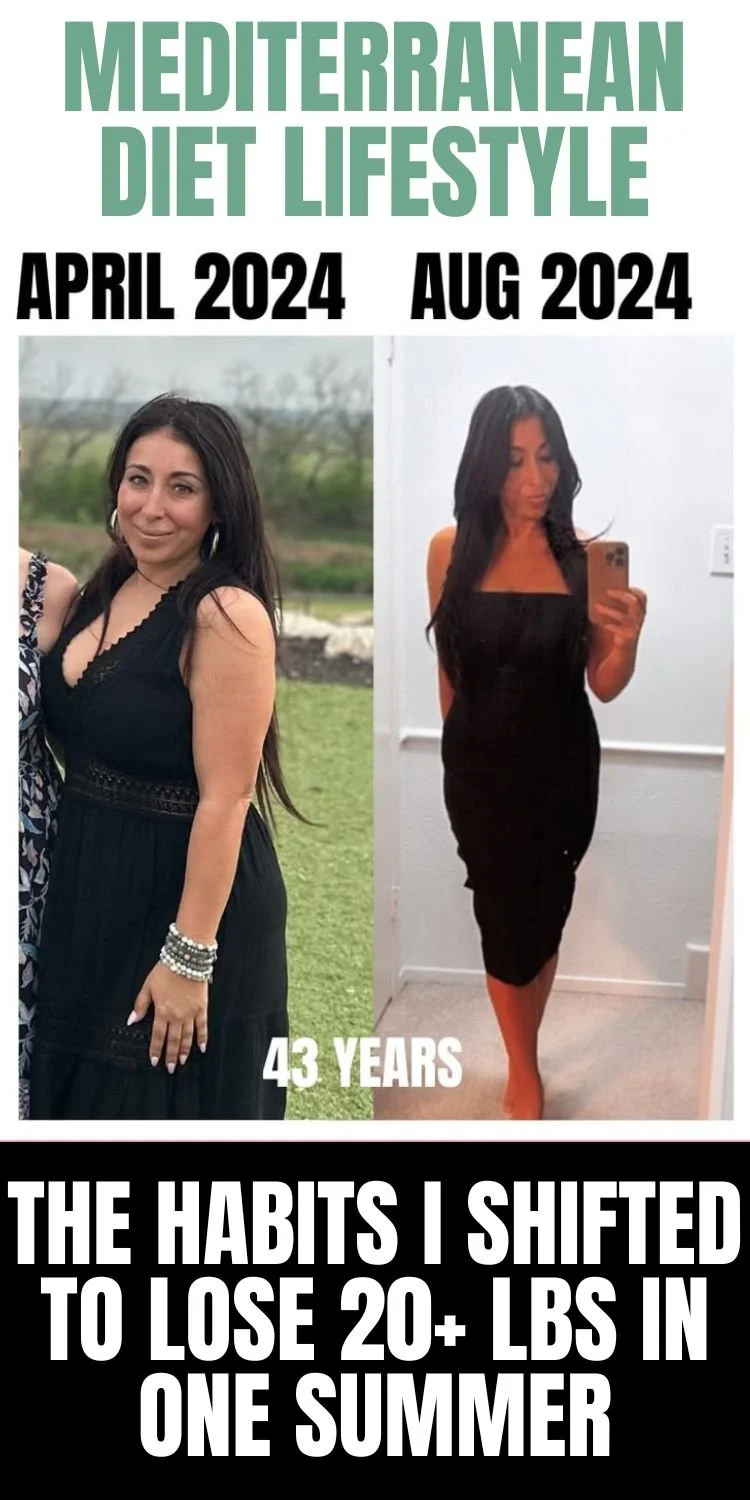
Here are 12 lifestyle tips to get you started:
1. Begin Your Day Gently (Hydration Before Stimulation)
One of the most subtle but powerful shifts I experienced was how mornings were approached.
There is no immediate rush into stimulation. No grabbing coffee and jumping straight into the day. Instead, your mornings should unfold slowly.
Hydration comes first—water, often with lemon. I like to make very hot water for myself in the morning to really get the digestion going.
And this matters more than most women realize, especially in your 40s and beyond. Overnight, your body becomes naturally dehydrated. Supporting it first thing in the morning helps regulate digestion, supports cellular function, and creates a more stable foundation for your energy throughout the day.
Before reaching for stimulation, you begin with support.
2. Let Food Be Simple, Fresh, and Alive
There is a noticeable difference in the way food is approached in Mediterranean regions.
It is not overcomplicated. It is not over-processed. And it is not disconnected from its origin.
Meals are built around ingredients that are recognizable, seasonal, and alive with nutrients—fresh vegetables, ripe fruits, herbs, legumes, whole grains, and thoughtfully sourced proteins.
There is a quiet confidence in simplicity.
Instead of chasing trends or constantly changing your diet, you begin to anchor into a way of eating that feels grounding, intuitive, and sustainable.
3. Embrace Healthy Fats as a Foundation of Beauty and Hormonal Health
One of the most liberating shifts for many women is releasing the fear around fat.
In Mediterranean cultures, fats—especially olive oil—are not avoided. They are celebrated.
Drizzled generously over vegetables. Paired with bread. Used in cooking without hesitation.
And this is not indulgent—it is intelligent.
Healthy fats play a critical role in hormone production, brain function, skin elasticity, and overall vitality. For women navigating their 40s and beyond, this becomes even more essential.
Your glow is not created by restriction.
It is supported by nourishment.
4. Eat Slowly, and Let Meals Become an Experience
Meals are not something to get through.
They are something to enter into.
This was one of the most profound shifts I witnessed—people sitting longer, eating slower, engaging with their food and with each other.
And from a physiological standpoint, this matters deeply.
Digestion is optimized when the body is in a relaxed state. When you slow down, when you chew properly, when you are present—you allow your body to actually receive the nourishment you’re giving it.
It transforms eating from a task into a ritual.
5. Wear Clothes That Let Your Body Breathe and Move Freely
This was something I didn’t expect to notice—but once I did, I couldn’t unsee it.
In the south of France, I found myself naturally reaching for clothing that felt effortless. Linen dresses. Soft fabrics. Pieces that moved with my body instead of restricting it.
There was a sense of ease—not just in style, but in how the body was allowed to exist.
No tight waistbands digging in. No overly structured pieces that felt constricting. Just clothing that supported movement, breath, and comfort.
And this may seem small, but it’s not.
The way you dress directly impacts how you feel in your body. When you’re restricted, you subconsciously hold tension. When you’re comfortable, your body softens.
This is part of the Mediterranean lifestyle that often goes unspoken—it honors the body, not just through food, but through how it is held, dressed, and experienced throughout the day.
6. Walk Daily as a Way of Living, Not Exercising
Movement is not separated from life.
It is part of it.
Walking through town. Walking to dinner. Walking after meals. It is gentle, consistent, and deeply effective.
This kind of movement supports circulation, digestion, lymphatic flow, and emotional regulation—without placing stress on the body.
And perhaps more importantly, it is sustainable.
7. Eat in Community Whenever Possible
There is something profoundly regulating about sharing a meal with others.
Conversation slows you down. Laughter softens the body. Presence deepens the experience.
This is not just emotional—it is biological.
Connection lowers stress hormones and supports digestion, making your meals more nourishing on every level.
8. Allow Pleasure Without Guilt (This Is Where Most Women Get It Wrong)
One of the most striking differences in the Mediterranean lifestyle is the absence of guilt around food and enjoyment.
Pleasure is not treated as something indulgent or “off track.” It is integrated into daily life in a way that feels natural, balanced, and deeply satisfying.
A glass of wine with dinner. Fresh bread dipped in olive oil. A long lunch that stretches into conversation. These are not seen as cheats or rewards—they are part of the experience of living well.
And this is where so many women, especially in their 40s and beyond, have to gently unlearn years of conditioning.
Because when you approach food from a place of restriction, guilt, or control, it creates stress in the body. And stress—more than almost anything else—disrupts hormones, digestion, and your overall sense of well-being.
The Mediterranean approach shifts you out of that cycle.
It invites you to enjoy your food, trust your body, and create a relationship with nourishment that is rooted in satisfaction rather than deprivation. When your meals are balanced with whole foods, healthy fats, and fiber, your body naturally regulates hunger and fullness signals.
This is also where you can begin to explore a more intuitive way of eating, where you’re no longer micromanaging every bite—but instead learning how to listen to your body’s cues and rhythms.
If you’ve been in a cycle of “on and off” with your health, this is one of the most powerful places to begin your reset.
9. Eat Seasonally and Let Nature Guide Your Body
One of the quiet principles of the Mediterranean diet is that food is not static—it changes with the seasons.
And when you begin to eat this way, something shifts.
In the summer months, the body naturally craves foods that are lighter, more hydrating, and easier to digest. Think of meals built around tomatoes, cucumbers, leafy greens, fresh herbs, berries, and citrus. These foods are naturally high in water content and nutrients that support hydration, skin health, and energy.
In contrast, heavier, warming foods tend to appear in cooler months when the body needs more grounding and warmth.
This is not a coincidence. It’s a form of natural intelligence that modern eating habits have largely disconnected us from.
When you align your diet with the seasons, you’re working with your body instead of against it.
From an SEO and wellness perspective, this is also where you can begin incorporating concepts like:
seasonal meal planning
summer Mediterranean diet recipes
foods that support hydration and hormone balance
Eating seasonally simplifies your decisions. It reduces overwhelm. And it reconnects you to a rhythm that feels intuitive, not forced.
10. Support Your Gut Health with Fiber, Fermented Foods, and Diversity
If there is one area of health that impacts everything—from hormones to mood to skin—it is your gut.
And one of the reasons the Mediterranean diet is so effective is because it naturally supports a diverse and thriving microbiome.
Meals are rich in fiber from vegetables, legumes, and whole grains. There is a natural inclusion of fermented foods like yogurt. Herbs and plant variety are abundant, which feeds beneficial gut bacteria.
This diversity is key.
Because your gut is not just responsible for digestion—it plays a major role in:
hormone regulation
immune function
inflammation levels
mental clarity and emotional balance
For women over 40, this becomes even more important as the body becomes more sensitive to imbalances.
Instead of focusing on restriction or elimination, the Mediterranean approach focuses on adding in nourishment.
This is where you can naturally weave in internal links to:
your gut health protocols
your morning routine rituals
or even your Glow Code nutrition framework
Because when your gut is supported, everything else becomes easier—your energy stabilizes, your skin improves, and your body begins to feel more responsive again.
11. Regulate Your Nervous System Through a Slower, More Intentional Pace
This may be the most transformative part of the Mediterranean lifestyle—and the most overlooked.
It’s not just what you eat.
It’s the pace at which you live.
In Mediterranean cultures, there is space between things. Meals are not rushed. Days are not stacked to the point of exhaustion. There is time to sit, to walk, to pause.
And while this may seem like a luxury, it is actually a biological necessity.
Your nervous system directly impacts your hormones, digestion, sleep, and overall health. When you are constantly in a state of urgency or stress, your body shifts into survival mode—making it much harder to feel balanced, energized, or well.
Slowing down is not about doing less for the sake of it.
It’s about creating a state where your body can actually function optimally.
This is where practices like:
mindful eating
morning rituals
evening wind-down routines
time spent outdoors
…become powerful tools for recalibration.
If you’ve been feeling overwhelmed, inflamed, or disconnected from your body, this is often the missing piece.
12. Romanticize the Way You Live (This Is the Secret to Sustainability)
At the heart of the Mediterranean lifestyle is something that can’t be measured or tracked—and yet, it changes everything.
It’s the ability to romanticize your life.
To turn ordinary moments into something intentional. To create beauty in the everyday. To experience your life instead of rushing through it.
This can look like:
setting the table, even when you’re eating alone
lighting a candle while you cook
playing music in the background
opening the windows and letting fresh air move through your home
These small shifts may seem simple, but they create a powerful ripple effect.
Because when your environment feels good, you feel good.
When your meals feel intentional, you eat differently.
When your life feels beautiful, you show up differently.
And this is what makes the Mediterranean lifestyle sustainable.
It’s not built on discipline or willpower.
It’s built on pleasure, presence, and a deep connection to how you live.
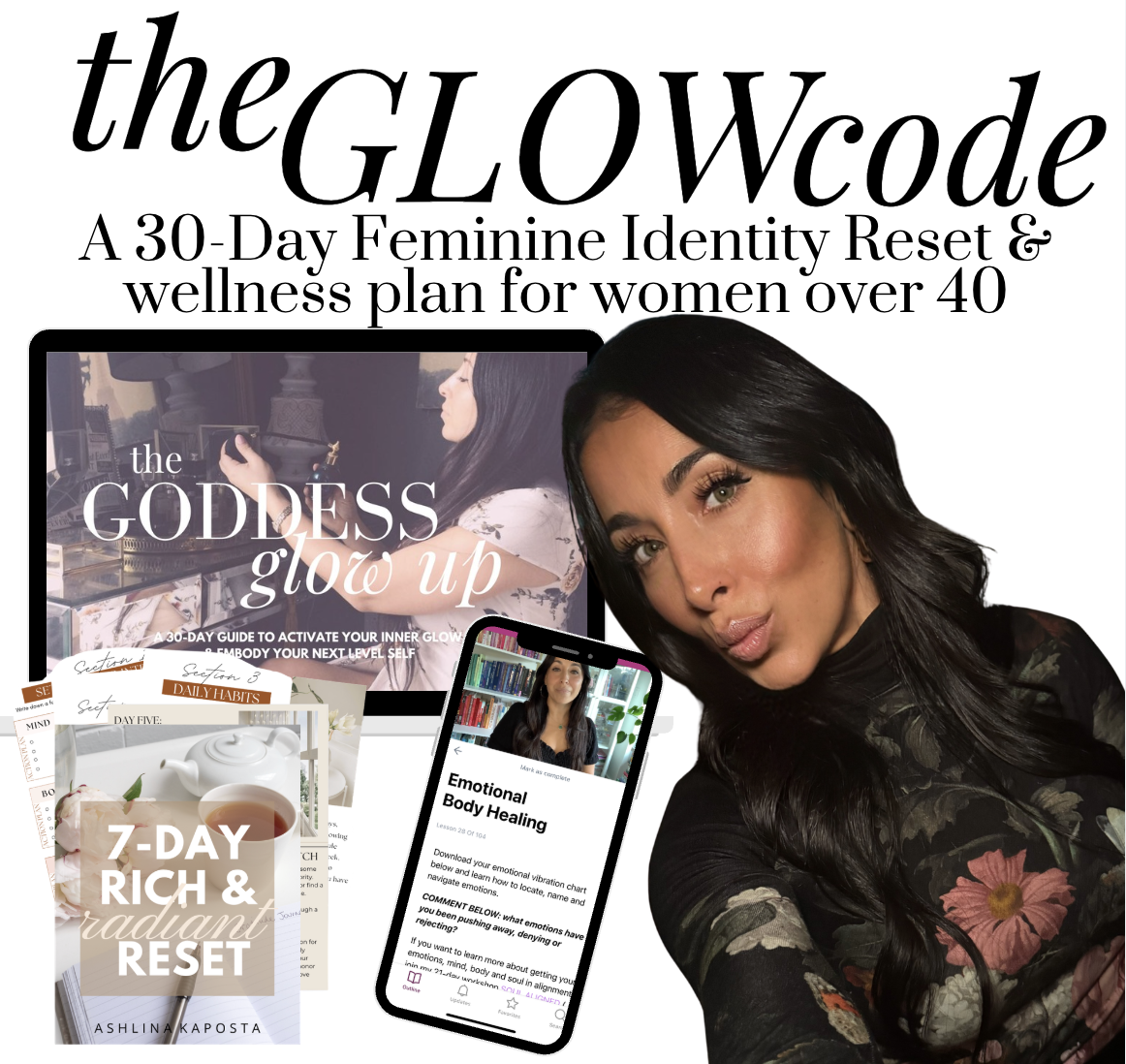
Be sure to download my 30 day protocol ‘The Glow Code’ here.
FAQ: Mediterranean Diet & Lifestyle for Women Over 40
What foods are included in a Mediterranean diet?
The Mediterranean diet focuses on whole, minimally processed foods such as vegetables, fruits, legumes, whole grains, nuts, seeds, olive oil, and fresh herbs. Protein sources typically include fish, eggs, and occasional high-quality meats, with dairy like yogurt and cheese in moderation.
This way of eating is less about strict rules and more about building meals around fresh, nutrient-dense ingredients that support long-term health.
Is the Mediterranean diet good for hormone balance?
Yes, the Mediterranean diet is one of the most supportive ways of eating for hormone balance, especially for women over 40.
The combination of healthy fats, fiber, and whole foods helps regulate blood sugar, reduce inflammation, and support estrogen metabolism—all of which are essential for hormonal health.
Can the Mediterranean diet help with weight loss?
Many women find that they naturally release excess weight when following a Mediterranean lifestyle—not because they are restricting, but because their body is functioning more efficiently.
Improved digestion, balanced blood sugar, and reduced stress all contribute to a more stable metabolism.
What does a typical Mediterranean day of eating look like?
A simple example might look like:
Breakfast: Greek yogurt with berries, honey, and nuts
Lunch: Tomato, cucumber, and feta salad with olive oil and herbs
Dinner: Grilled fish with roasted vegetables and a side of whole grains
Snacks: Fresh fruit, nuts, or olives
Meals are simple, satisfying, and built around whole ingredients.
Do you have to give up anything on the Mediterranean diet?
No, and that’s part of what makes it sustainable.
Rather than focusing on elimination, the Mediterranean lifestyle emphasizes replacing highly processed foods with whole, nourishing options. There is still room for enjoyment, balance, and flexibility.
Is wine allowed on the Mediterranean diet?
Yes—in moderation.
In Mediterranean cultures, wine is often enjoyed with meals and in a social setting, rather than consumed excessively or in isolation. It becomes part of the experience, not a habit driven by stress.
How quickly will I see results from the Mediterranean lifestyle?
Many women begin to notice improvements in digestion, energy, and overall well-being within a few weeks. However, the most meaningful results—such as hormone balance, skin health, and long-term vitality—build over time with consistency.
Is the Mediterranean diet good for gut health?
Yes, it is one of the best dietary patterns for gut health.
The emphasis on fiber-rich foods, plant diversity, and fermented elements helps support a healthy microbiome, which plays a central role in digestion, immunity, and overall health.
Can I follow the Mediterranean lifestyle if I’m busy?
Absolutely—but it may require a shift in how you approach your time.
The Mediterranean lifestyle is not about doing more, but about doing things differently—simplifying meals, slowing down where possible, and creating small rituals that support your well-being.
A Return to the Way Your Body Was Meant to Live
There is a version of health that feels rigid, controlled, and exhausting.
And then there is this.
A way of living that feels supportive. Grounded. Sustainable.
A way of eating that nourishes instead of restricts.
A rhythm that allows your body to soften, regulate, and respond.
The Mediterranean lifestyle is not something you force yourself into.
It’s something you return to.
A slower pace.
A deeper presence.
A more intuitive connection to your body and your life.
And in your 40s, this shift becomes everything.
Because this is no longer about chasing results—it’s about creating a way of living that actually supports you.
This summer can be the beginning of that shift.
Not through extremes.
Not through overthinking.
But through small, intentional changes that bring you back into alignment with what your body has been asking for all along.
And when you begin to live this way—
your glow is no longer something you try to achieve.
It becomes something you naturally embody.
You may also like:
🌹 10 healthy habits that aren’t actually healthy
🌹 How to finally become a securely attached woman
🌹 10 morning habits to help start your day with clarity + intention
🌹 12 feminine energy books every woman should read
🌹 44 things to do on a Sunday to start your week off right
Please feel free to email me at ashlina@thedecorista.com if you have any questions! I’m always happy to help with decorating, life advice or even picking out a specific perfume! Have an amazing day!!
Also, check out my Amazon shop HERE to shop all my favorite things, tips and tricks. You can also download the free LIKETOKNOW.IT app and follow me HERE.
STAY IN THE KNOW: Don’t forget to sign up for my exclusive Love Letters for STYLE TIPS, LIFE ADVICE, COSMIC TEA, AND MUCH MORE!
As always, thank you so much for stopping by today, I truly appreciate all of you! xo, Ashlina
FOLLOW ALONG: Instagram | Pinterest | Shop Amazon | You Tube