I've pretty much been shopping flea markets and antique fairs since birth. Every woman in my family lists antiquing as a top-three favorite hobby, so by the time I could walk, I was trailing my mom and aunts through dusty barns, learning how to spot a good frame, how to sweet-talk a dealer, and how to fit a dresser into a car that was clearly too small for it.
Round Top has always been our Super Bowl.
Twice a year (and now three times, with the newer winter show), a tiny Texas town with a population of about 90 turns into one of the biggest antique shopping events in the country. Designers fly in from New York and LA. Pickers drive in from all over. Girlfriends rent farmhouses and make a whole weekend of it. And every single season, I see first-timers wandering the fields looking completely overwhelmed, sunburned and empty-handed by noon.
That doesn't have to be you.
I first wrote about how to shop Round Top back in 2016, and so many of you have asked me questions since then that I decided to give this post the glow-up it deserved. Below are the 10 things I really want you to know before you go: how the show actually works, when to get there, what to wear and bring, how to negotiate, what to hunt for, and how to get your treasures home in one piece.
If you're looking for my favorite venues, where to stay and where to eat, I put all of that in my full Round Top Antiques Week guide. This post is all about how to shop it like a pro and walk away with pieces you'll love for years.
Grab an iced coffee and let's get into it.

1. Round Top isn't one fair. It's 11 miles of them.
This is the number one thing first-timers don't realize. When people say "Round Top," they're really talking about dozens of separate shows stretched along about 11 miles of Texas Highway 237, running from Warrenton through Round Top and on toward Carmine, with more venues tucked around Burton and Fayetteville.
The Original Round Top Antiques Fair at the Big Red Barn is the show that started it all back in 1968. Since then, nearly a hundred venues have popped up around it: barns, tents, hayfields, air-conditioned halls and roadside fields. There's no single organizer. Each venue is independently owned and sets its own dates, hours and admission, which is why you'll see different dates depending on where you look.
What this means for you:
Pick your zones. You cannot do it all in one day, or even three. Choose a cluster (Round Top proper, Warrenton, Carmine) and go deep instead of zigzagging up and down 237.
Check each venue's dates. Some open a week or more before others. Some charge admission and some are free.
Mix high and low. Curated venues like The Arbors, Market Hill and The Compound feel polished and design-forward. The open fields in Warrenton are where the real treasure hunting happens. The magic is in doing both.

2. Go early. That's when the cool kids go.
This was my "super cool tip" in the original post and it's still my favorite. The big week everyone talks about isn't really when Round Top starts. Vendors start setting up and selling well before the busiest days, and that's when the pickers, dealers and designers are out scooping up the best pieces.
For fall 2026, the Original Round Top Antiques Fair at the Big Red Barn opens with Designer Day on October 25, then runs October 26 through 31. Its sister venue, Blue Hills, opens earlier, October 17 through 31. The spring 2026 show ran March 14 through 28, and there's now a smaller winter show at the Big Red Barn, January 21 through 23, 2027. Always double-check dates with the specific venues you want to hit before you book anything.
A few timing tips:
Arrive when the gates open. The best pieces go first, and mornings are cooler.
Go on a weekday if you can. Weekends are packed with day-trippers from Houston and Austin, and traffic on 237 can crawl.
Go back on the last day for deals. Dealers would rather not haul a heavy piece home, so late-week prices can soften. The trade-off: selection is thinner.
Book your stay months ahead. Rooms in and around Round Top sell out fast for show weeks. I share where I love to stay in my Round Top guide.

3. Shop with a plan (and a tape measure)
Before you leave home, walk through your house and decide what you're actually hunting for. A mirror over the console? A pair of lamps for the bedroom? A rug for the living room? Write it down.
Then do these three things:
Measure the spaces you're trying to fill and write the dimensions in your phone notes. Include the height of ceilings, the width of the wall, and doorways if you're eyeing furniture.
Take a photo of each space. If you need a mirror for above a console, snap the wall so you can picture the mirror there instead of trying to remember it.
Measure your vehicle. Know your cargo space with the seats down. You'd be surprised how many people fall in love with a sideboard and then realize it's not going home in a crossover.
Designers make it look easy to do all of this from memory, but they've had years of practice. Finding a good score at Round Top is all about making smart, quick decisions, and the prep is what lets you say yes with confidence before someone else does.

4. Dress for dust, heat, mud and a lot of walking
Round Top is a gorgeous mix of style and dirt. You'll see women in cowboy boots, linen and big hats, and you'll also see a lot of mud. Texas weather is unpredictable during show weeks. You can start the morning in a jacket, deal with wind by lunch and be hot and sticky by afternoon. In spring and fall, a rain shower can turn a hayfield into a mud pit in an hour.
My rules:
Comfortable shoes are non-negotiable. Broken-in boots or supportive sneakers. Not new boots. You'll walk miles.
Layer. A tank or tee, a light button-down or denim jacket, and a crossbody bag that leaves your hands free.
Bring sun protection. A wide-brim hat, sunglasses and SPF. A lot of the fields have zero shade.
Pack a rain layer and keep a change of shoes in the car.
5. Bring cash, a cart and a survival kit
Most vendors take cards now, but cash still talks. It's faster, it's easier to negotiate with, and some smaller field vendors are cash-only. There are ATMs around, but lines get long, so hit the bank before you head out.
What I keep in my car and my bag:
Cash in small bills, plus a card as backup
A tape measure (the most important tool you'll bring)
A folding wagon or rolling cart. Just know some venues don't allow them on opening day, including the Big Red Barn, so check the rules.
Water and snacks. You'll be out for hours.
A portable phone charger. You'll be taking pictures of everything.
Bubble wrap, old blankets, moving straps and bungee cords for the drive home
Hand wipes and hand sanitizer. Antiques are dusty. You're welcome.
A notebook or notes app to track what you saw and where, so you can circle back without walking the whole field twice
One more pro tip: take a picture of the vendor's booth sign or business card every time you see something you're thinking about. By hour four, every barn starts to look the same.


6. Bring some confidence and ask for the deal
Don't be afraid to ask for a better price. I know so many women who hate this part, but here's the secret: dealers expect it. Most are happy to work with you so the price feels good for both of you. Negotiating is part of the culture at Round Top, not an insult.
How I do it, gracefully:
Be kind and genuinely interested first. Compliment the piece, ask about it, build a little rapport.
Ask, don't demand. "What's the best you can do on this?" or "Is there any wiggle room on the price?" works beautifully.
Bundle. Buying two lamps and a mirror from the same booth? Ask for a package price. This is where the best deals live.
Mention cash. Some dealers will knock a little off for cash.
Don't lowball. Offering half of a fair price on a quality antique is the fastest way to end the conversation. A reasonable ask is usually 10 to 20 percent off.
Be ready to walk away, and be ready to buy. If you love it and it's fairly priced, don't risk it. The "I'll come back later" piece is almost always gone when you do.
7. Ask a TON of questions
I've read so many times about how powerful the art of listening is. When you let yourself be receptive to other people's stories and ideas, there's a whole world of opportunity in that. You never know what you'll learn or what you were meant to hear.
Antique dealers are basically art historians. They are so passionate about what they make, find and sell, and most of them will light up if you show real curiosity. Ask them:
Where did this come from? Region, estate, country of origin.
How old is it, and how do you know? Look for makers' marks, signatures, construction details.
Has it been restored, repaired or refinished? Totally fine if so, but it affects value.
Does the lighting work, and has it been rewired? Especially important for vintage lamps and chandeliers.
Is there a story behind it? There's always a fantastic story.
Those stories are a big part of what makes an antique feel special once it's home. Every time someone compliments the piece, you get to tell it.

8. Know what to hunt for
Round Top has everything: French country, primitive Texas pieces, mid-century, Hollywood Regency, industrial, Western. It's easy to get overwhelmed, so here's where I always focus.
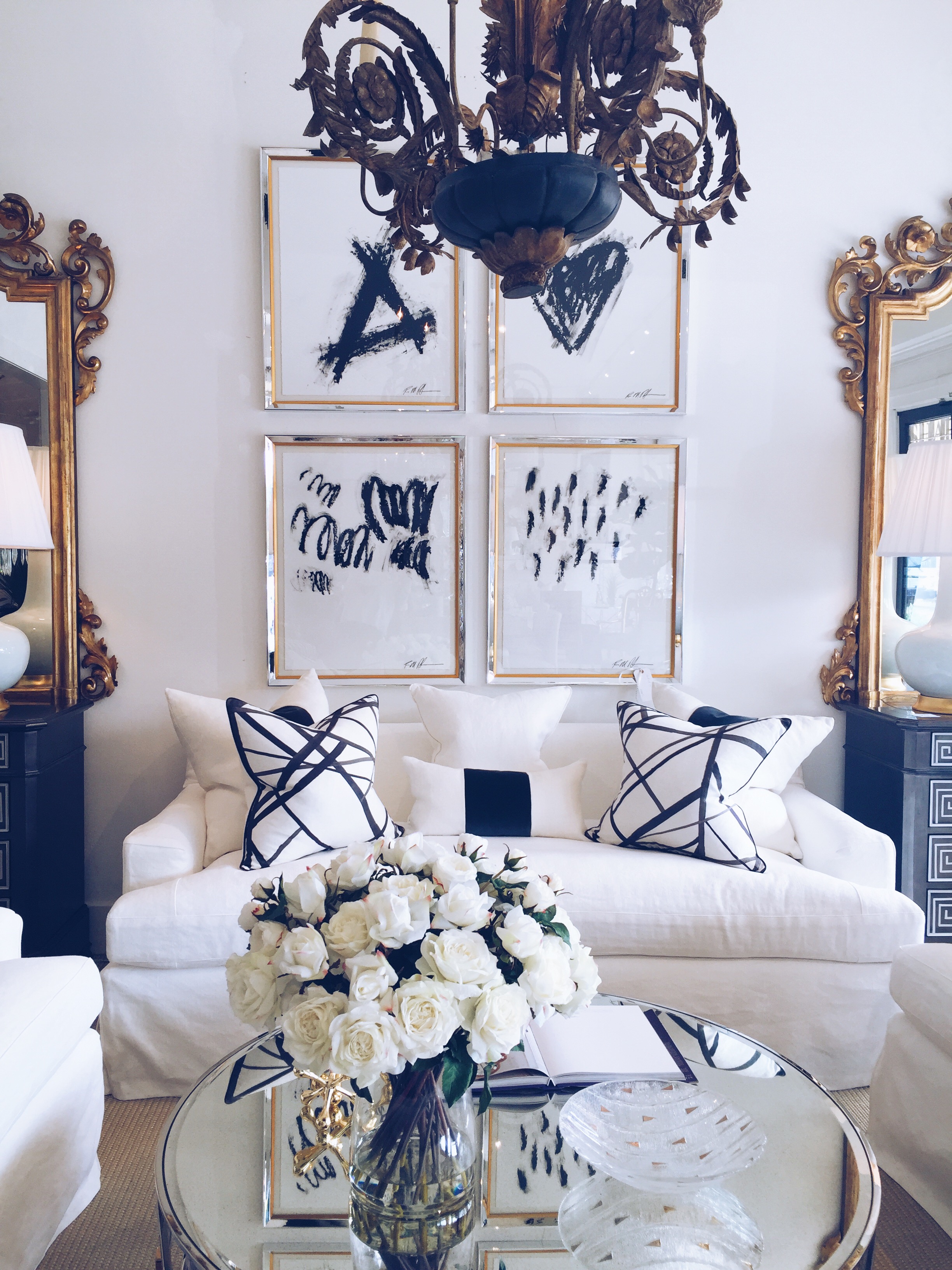
Great artwork, and even better frames. Honestly, I think an antique fair is the best place to find amazing art. I love original, unique work. Pay attention to the frame: make sure it's solid and sturdy. Custom framing can cost a ton, so a good frame is key. I once found an ornate gold frame with a pretty black-and-white abstract piece and fell in love on the spot. Even if you hate the art, you can paint over it or swap it out, because that frame is the real prize. [Photo: gold frame with black and white abstract]
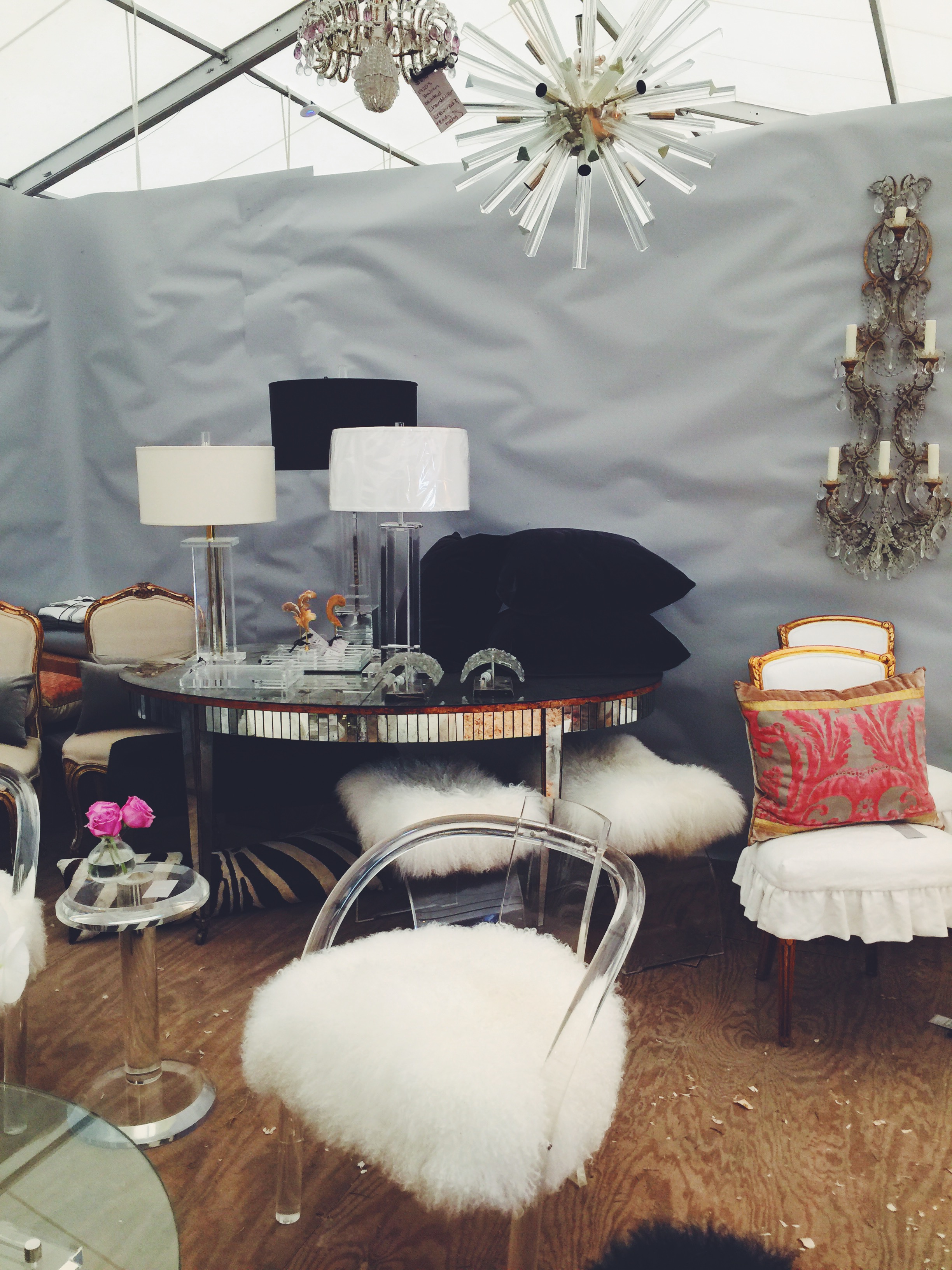
Unique lighting. Chandeliers and lamps are some of my favorite things to buy vintage. They just don't make them the way they used to, and antique lighting is like a work of art in itself. I've swooned over sputnik chandeliers and lucite table lamps in every shape and size. Ask whether it's been rewired, and budget for it if not. [Photo: sputnik chandelier and lucite lamps]
Lucite. Speaking of lucite, Round Top is where I like to find it, because it's usually fairly priced here compared with retail, where it can be crazy expensive. If you see a fab piece at a great price, score it. Even if it doesn't end up working in your home, vintage lucite resells well on Facebook Marketplace.
Rugs as your statement piece. A rug can set the stage for an entire room. Vintage rugs are usually colorful and cozy, and they're a fantastic way to build a color palette. I once fell for a stack of pink Moroccan rugs from Heja Home that had me dreaming up a girl's room in a beach house. If you're trying to come up with a scheme for a room, start with the rug. [Photo: pink Moroccan rugs]
Whimsical pieces. I found the most amazing brass palm tree once. I had no idea where I'd put it, but it would be perfect in an empty corner. These are the pieces that create Pinterest-worthy vignettes. [Photo: brass palm tree]
Everyday upgrades. Look for unique pieces to hold everyday things: toilet paper, hand towels, magazines, plants. I found a brass-and-lucite planter that made a regular houseplant look so glam. Small upgrades like this are affordable and they add so much personality. [Photo: brass and lucite planter]
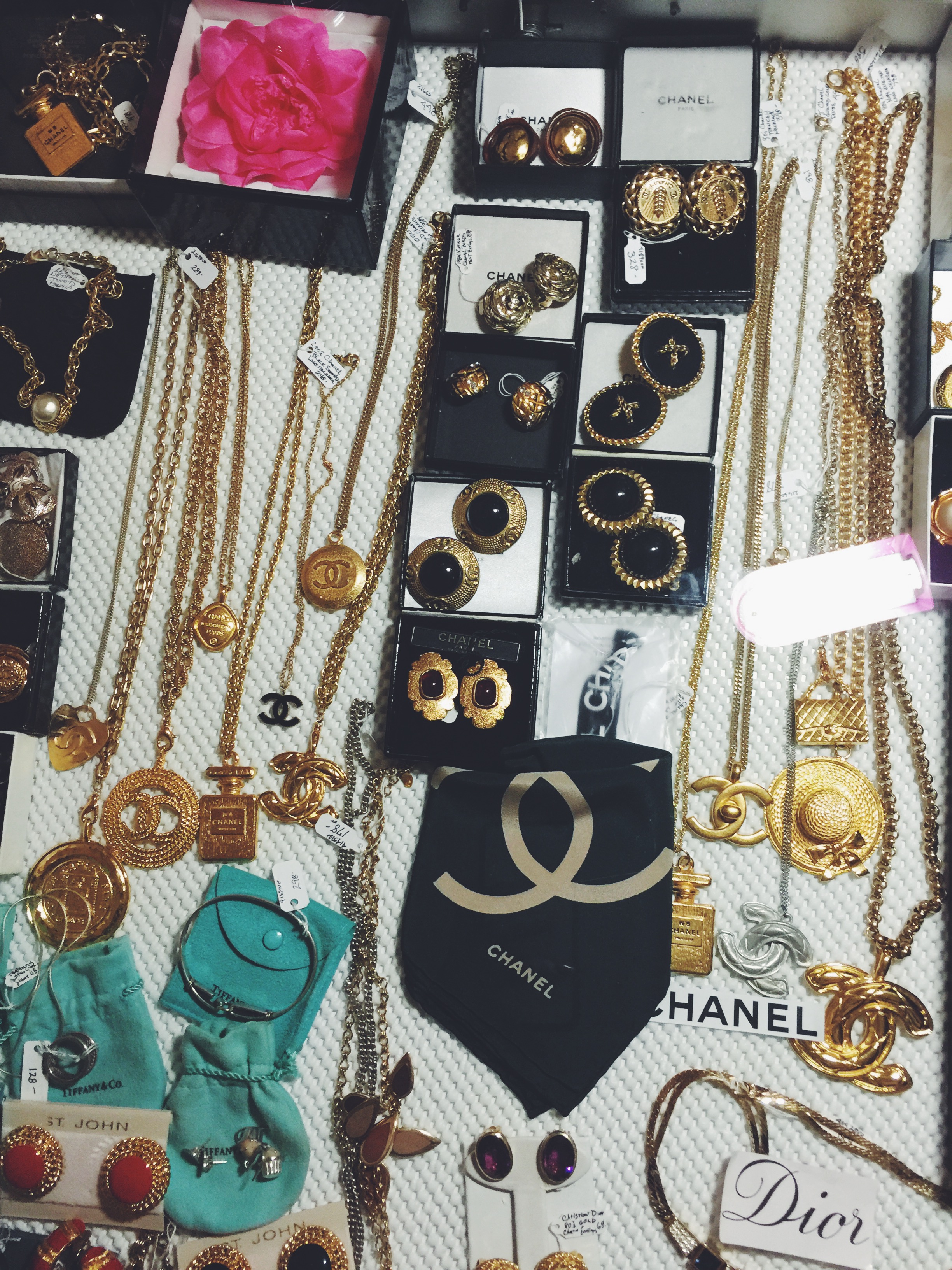
Vintage jewelry. I always head to the jewelers. I'm a huge fan of vintage clip-on earrings and have a whole collection, including a pair of gold vintage Chanel clip-ons I couldn't resist. Hello! [Photo: vintage Chanel clip-on earrings]
9. Be open to the piece that chooses you
Yes, have a plan. But also leave room for magic.
I can't tell you how many times I've stumbled on something I absolutely didn't need, but had a feeling I couldn't live without. Those pieces always end up being the biggest conversation starters in my home, the thing that everyone comments on when they walk in. It might not be the prettiest thing in the world, but you just love it.
The things that speak to you are what you should fill your home with. Be open to the energy of the pieces that are meant for you. This is totally Glam-shui.
And even when you're not buying, keep your eyes open for inspiration. Round Top is one of the best places in the world to get decorating ideas, because you're seeing how dealers and designers from all over style their booths: fabric choices on chairs, pillow combinations, gallery-wall layouts, unexpected color pairings. I once fell for the exact shade of grey paper lining one booth, and how good it looked with silver and black. Take photos and take a little from everything that speaks to you. [Photo: grey paper booth]
10. Have a plan to get it home
This is the part nobody thinks about until they're standing next to an eight-foot armoire with a sedan.
The good news: Round Top is set up for it.
Porters can carry your purchases to your car at many venues. Tip them well.
Shippers are on site at the bigger venues for large pieces. Get a quote before you buy if it's a big item, and factor it into your budget.
Ask about holds. Many dealers will tag a piece as sold and hold it for you to pick up later in the day, or later in the week. Get a receipt, a name and a phone number.
Bring backup. If you're planning to shop furniture, bring a truck or SUV, or a friend who has one.
Pack carefully. Wrap mirrors, art and lighting in blankets or bubble wrap and strap them down. Lay mirrors flat, never on edge.
The smartest shoppers I know shop furniture first thing (when selection is best), arrange pickup or shipping, and spend the rest of the day on smaller pieces they can carry.
Round Top Antiques Fair FAQ
When is the Round Top Antiques Fair? Round Top happens in the spring (usually March into early April) and the fall (usually October), with a smaller winter show at the Big Red Barn. For fall 2026, the Original Round Top Antiques Fair runs October 25 to 31, and Blue Hills opens October 17. Each venue sets its own dates, so check the ones you plan to visit.
Where is Round Top, Texas? Round Top sits in Fayette County, roughly halfway between Houston and Austin. From Houston it's about an hour and a half drive, and from Austin a little over an hour, depending on traffic.
Is Round Top free to attend? Some venues and fields are free and some charge admission, especially on opening and designer days. Parking ranges from free to a small fee depending on the venue.
How many days do I need? Two to three days is the sweet spot for a first trip. One day works if you pick one area and stick to it.
What's the best day to go? Opening days for the best selection, weekdays for smaller crowds, and the final days for the best chance at a deal.
Can I bring my kids or dog? You can, but it's a long, hot, crowded day of walking. Some venues limit strollers and wagons on opening day, and pet rules vary by venue, so check before you go.
Do vendors take credit cards? Most do, but bring cash. Some field vendors are cash-only, and cash can help you negotiate.
Can I get furniture shipped home? Yes. Many larger venues have shippers on site, and plenty of dealers will hold pieces for later pickup. Get quotes before you commit to a big piece.
Where should I stay and eat? Book as early as you can because rooms sell out. I share my favorite stays and restaurants in my full Round Top Antiques Week guide.
Closing
Round Top is so much more than a shopping trip. It's dusty boots and iced coffee, girlfriends laughing over a find in the back of a barn, and that little rush when you spot the piece you didn't know you were looking for. Go early, go prepared, ask questions, negotiate with a smile and stay open to the pieces that are meant for you.
And when you get home and someone asks, "Where did you find that?" you'll get to tell the story.
Are you heading to Round Top this season? If you have your own tips, leave them in the comments below. I'd love to hear how you shop it.
Pin this post for later so you have it handy on your phone when you're out in the fields. And for where to stay, eat and shop, don't miss my full Round Top Antiques Week guide.